
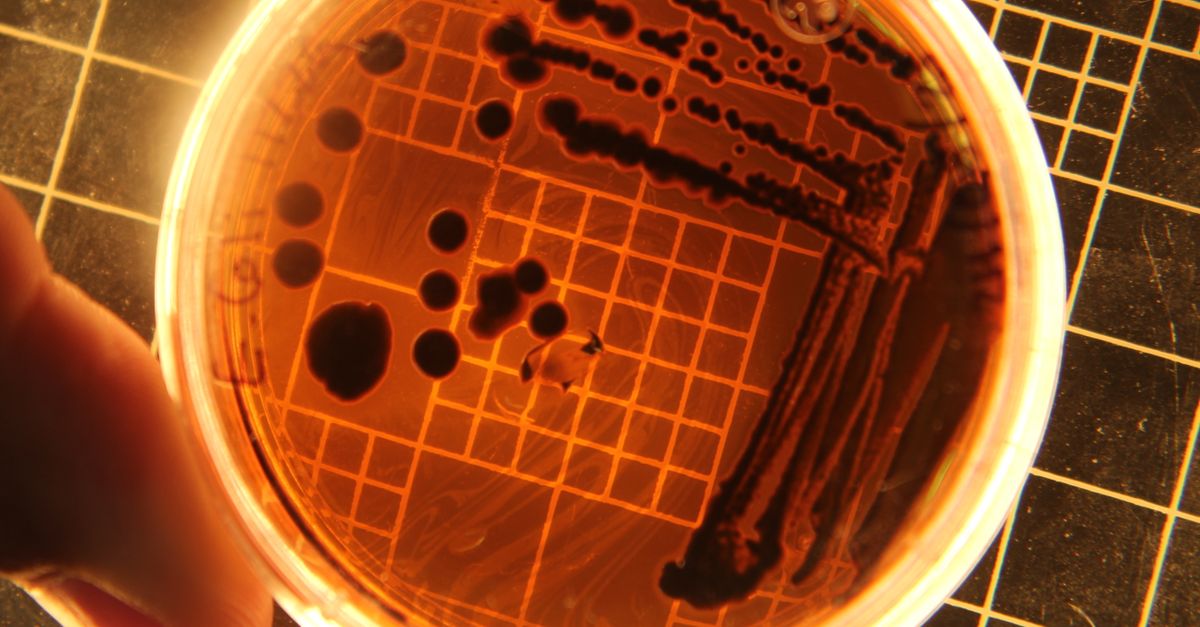
1. Deinococcus radiodurans — The Radiation Survivor
Deinococcus radiodurans is frequently recognized as the most resilient bacterium on the planet. It endures ionizing radiation levels reaching 5,000 grays while remaining viable, and survives brief exposures of 15,000 grays. By comparison, a mere 5 grays proves fatal to humans.
Its resilience comes from several coordinated mechanisms:
- Highly efficient DNA repair systems that reassemble shattered chromosomes within hours
- Multiple genome copies that serve as repair templates
- Protective proteins that shield cellular components from oxidative damage
This microbe was discovered in the 1950s in irradiated canned food. It has since been found in desert soils, nuclear waste sites, and even the upper atmosphere. Its extraordinary resistance makes it a model organism for astrobiology and biotechnology applications involving radiation-rich environments.
2. Tardigrade-Associated Microbes — Survivors of Extreme Desiccation
While tardigrades themselves are microscopic animals, several microorganisms associated with extreme desiccation share comparable endurance. Among them, Chroococcidiopsis, a cyanobacterium, stands out for surviving prolonged dehydration and intense ultraviolet radiation.
It thrives in desert crusts and Antarctic rocks, enduring:
- Years without liquid water
- High UV exposure
- Severe temperature fluctuations
Its survival strategy includes thick extracellular sheaths, DNA repair enzymes, and protective pigments. Experiments have demonstrated survival after simulated space exposure, reinforcing its status as one of the most resilient photosynthetic organisms known.
3. Thermococcus gammatolerans — Heat and Radiation Combined
Thermococcus gammatolerans represents a hyperthermophilic archaeon originally sourced from hydrothermal vents located in the deep sea. It thrives best around 88 degrees Celsius and manages to endure radiation levels reaching 30,000 grays.
This dual resistance to heat and radiation is rare. Its proteins remain stable at extreme temperatures, and its DNA repair mechanisms rapidly address double-strand breaks. The organism’s habitat—deep beneath the ocean under high pressure—adds another layer of stress tolerance.
Its resilience supports theories that life may exist in extreme extraterrestrial environments, such as subsurface oceans on icy moons.
4. Bacillus anthracis Spores — Masters of Dormancy
The bacterium Bacillus anthracis, which is responsible for anthrax, produces endospores capable of surviving in the soil across decades. These spores withstand:
- Heat up to 150 degrees Celsius for short periods
- Desiccation
- Chemical disinfectants
- Ultraviolet radiation
Endospores contain dehydrated cytoplasm and protective protein layers that shield DNA. Similar durability is seen in other spore-forming bacteria such as Bacillus subtilis. Viable spores have reportedly been recovered from century-old materials, demonstrating the remarkable longevity of this survival strategy.
5. Halobacterium salinarum — Thriving in Salt Saturation
Halobacterium salinarum is an archaeon that inhabits environments with salt concentrations approaching saturation, such as salt lakes and evaporation ponds. Conditions lethal to most life forms are optimal for this microbe.
Its resilience is based on:
- High intracellular potassium concentrations that balance external salt
- Proteins adapted to function in extreme salinity
- Light-driven proton pumps for energy production
Remarkably, cellular structures preserved inside primeval salt deposits have displayed prospective viability following millions of years, although such assertions continue to face rigorous scientific investigation.
6. Pyrolobus fumarii — Living at the Edge of Boiling
Discovered in hydrothermal vent systems, Pyrolobus fumarii holds the record for one of the highest known growth temperatures of any organism: 113 degrees Celsius. It cannot survive below 90 degrees Celsius.
At such temperatures:
- Proteins risk denaturation
- DNA becomes unstable
- Cell membranes lose integrity
This archaeon surmounts these obstacles via heat-tolerant enzymes, unique membrane lipids, and DNA-stabilizing proteins. Its presence redefined the established upper thermal thresholds for biological existence.
7. Acinetobacter radioresistens — A Hospital Survivor
Acinetobacter radioresistens demonstrates significant resistance to radiation, desiccation, and disinfectants. It has been isolated from hospital environments, where it survives on dry surfaces for extended periods.
Its longevity is tied to:
- Robust antioxidant systems
- Efficient DNA repair pathways
- Protective outer membrane structures
Beyond environmental resilience, its genetic traits can contribute to antibiotic resistance transfer among pathogenic relatives, raising clinical concerns.
8. Methanopyrus kandleri — Pressure and Heat Specialist
Methanopyrus kandleri is a methanogenic archaeon found near deep-sea hydrothermal vents. It can grow at temperatures up to 122 degrees Celsius under high-pressure conditions.
This microorganism:
- Generates methane as a metabolic byproduct
- Contains remarkably thermostable enzymes
- Preserves structural integrity under extreme hydrostatic pressure
Its discovery extended the known temperature boundary for life and provided insight into early Earth conditions, when geothermal activity was far more intense than today.
The Broader Meaning of Microbial Toughness
The hardiness of these eight microorganisms defies traditional assumptions regarding life’s boundaries. Ranging from radiation-baked settings to boiling hydrothermal vents and ultra-salty lakes, they illustrate that living systems adapt, not by steering clear of harsh conditions, but by engineering molecular mechanisms to endure them.
Their survival strategies—DNA repair mastery, protein stabilization, dormancy, osmotic balance, and metabolic flexibility—illustrate evolution at its most inventive. Studying these organisms not only advances medicine, environmental science, and biotechnology, but also reshapes our understanding of where life might persist beyond Earth. The boundaries of habitability continue to expand as each new extremophile reveals that life is less fragile, and far more resourceful, than once imagined.