
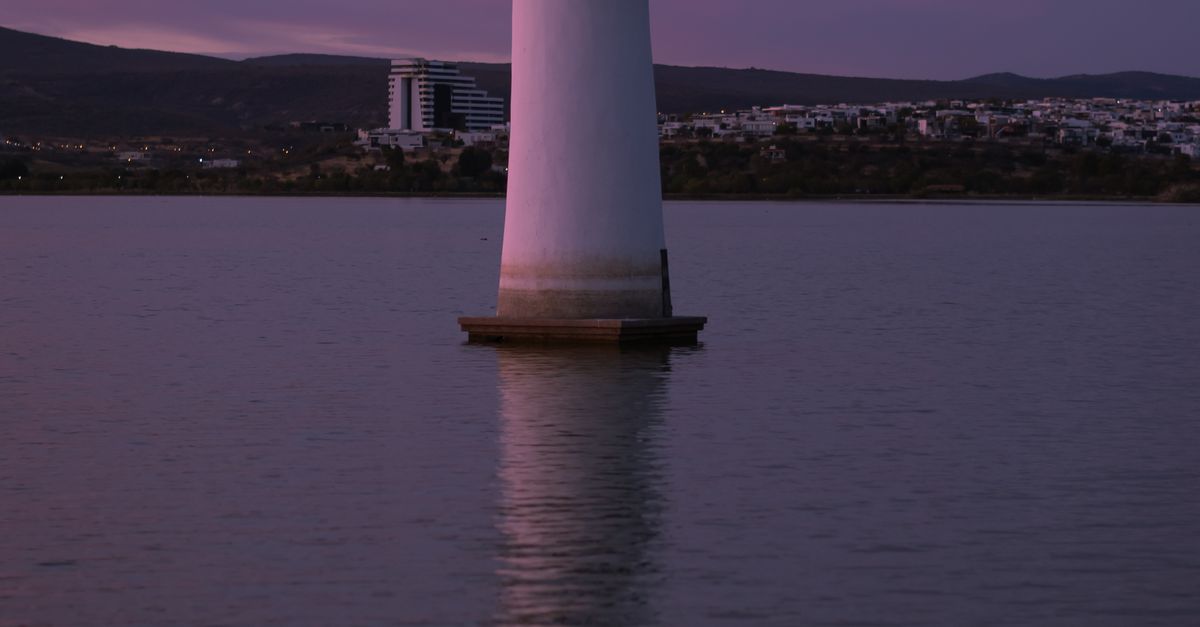
The American coastline spans upwards of 12,000 miles across the Atlantic, Pacific, Gulf, and Great Lakes shores. Throughout the centuries, these waters have been watched over by lighthouses, steering vessels safely past fog, storms, reefs, and unstable sandbars. Aside from their core guiding function, numerous beacons have evolved into cultural landmarks, architectural masterpieces, and potent emblems of endurance. Featured below are the 12 most famous lighthouses along the American coast, each boasting its own unique heritage and story.
1. Portland Head Light (Maine)
Commissioned by George Washington in 1787 and first illuminated in 1791, Portland Head Light ranks among the oldest lighthouses in the United States. Situated in Cape Elizabeth, Maine, the structure reaches 80 feet in height, boasting a focal plane situated 101 feet above sea level.
Its white conical tower and red-roofed keeper’s house have become synonymous with New England maritime imagery. The light once used whale oil and later kerosene before electrification. Today, it remains an active aid to navigation and a major tourist attraction within Fort Williams Park, drawing over a million visitors annually.
2. Cape Hatteras Lighthouse (North Carolina)
Reaching a height of 210 feet, Cape Hatteras holds the title of the highest brick lighthouse in the United States. Constructed back in 1870, this structure shields vessels from the perilous Diamond Shoals, a zone infamous for its numerous maritime disasters.
Back in 1999, the entire structure was shifted 2,900 feet inland to safeguard it against coastal erosion. Without needing any dismantling, this groundbreaking engineering achievement successfully saved the lighthouse. Because of its iconic black-and-white spiral design, the beacon stands out as one of the most easily identifiable landmarks throughout America.
3. Statue of Liberty Lighthouse (New York)
Although widely celebrated worldwide as an emblem of liberty, the Statue of Liberty additionally operated as a beacon between 1886 and 1902. Its flame was designed to function as a navigational guide for vessels entering New York Harbor.
Although it proved inadequate as a practical lighthouse, its role in maritime history remains significant. The structure stands 305 feet from ground to torch tip and remains one of the most visited monuments in the country.
4. Tybee Island Light (Georgia)
Constructed initially in 1736, the Tybee Island Light stands as one of the nation’s most enduring historic lighthouses, despite the present structure being reconstructed during 1867. This beacon serves to guide vessels toward the mouth of the Savannah River.
At 154 feet tall, its black-and-white bands distinguish it from many coastal lights. The site includes restored keeper’s cottages, offering insight into 19th-century lighthouse operations and coastal defense.
5. St. Augustine Lighthouse (Florida)
Built in 1874, this 165-foot tower features a striking black-and-white spiral design. Located on Anastasia Island, it guides vessels along Florida’s northeastern coast.
The lighthouse survived numerous hurricanes and has become associated with maritime archaeology and local history. Visitors can climb its 219 steps for panoramic views of the Atlantic and Matanzas Bay.
6. Key West Lighthouse (Florida)
Built in 1848 and subsequently restored following hurricane destruction in 1858, Key West Lighthouse served an essential function in protecting vessels sailing through the Florida Straits.
Uniquely, several women served as head keepers here during the 19th century, including Barbara Mabrity, who maintained the light for over 30 years despite personal tragedy and severe storms. The 88-foot tower stands near the Ernest Hemingway Home, enhancing its cultural appeal.
7. Morris Island Lighthouse (South Carolina)
Finished in 1876, the Morris Island Lighthouse was originally built on dry land, though severe shoreline erosion has left it seemingly isolated amidst the water. Even though it was deactivated in 1962, the structure continues to serve as a landmark silhouette off the coast of Charleston.
Preservation efforts continue to stabilize the 161-foot brick tower, which symbolizes both maritime heritage and the environmental challenges facing coastal communities.
8. Biloxi Lighthouse (Mississippi)
Built in 1848, Biloxi Lighthouse is notable for standing in the median of a busy highway along the Gulf Coast. It withstood Hurricane Katrina in 2005, despite severe storm surge damage to surrounding areas.
The cast-iron tower, standing 64 feet tall, embodies the resilience of Gulf Coast communities and continues to welcome visitors for public tours.
9. Point Reyes Lighthouse (California)
Constructed in 1870, Point Reyes Lighthouse sits 308 steps below the cliff top on a remote headland north of San Francisco. The area is known for dense fog and strong Pacific winds.
Its first-order Fresnel lens projected a beam visible up to 24 miles. Though automated in 1975, the lighthouse remains a vital historic site within Point Reyes National Seashore.
10. Yaquina Head Lighthouse (Oregon)
First illuminated in the year 1873, Yaquina Head stands as the loftiest lighthouse throughout Oregon, measuring 93 feet in height. It looks out over a striking basalt promontory beside the Pacific Ocean.
Still operational, its beam reaches 21 miles offshore. The surrounding area is designated as a National Outstanding Natural Area, combining ecological significance with maritime history.
11. Heceta Head Lighthouse (Oregon)
Built in 1894, Heceta Head Lighthouse is often cited as one of the most photographed lighthouses in the United States. Perched 205 feet above the Pacific, its powerful beam was historically visible for 21 miles.
The restored keeper’s house now operates as a bed-and-breakfast, blending preservation with tourism. Its picturesque setting amid cliffs and forests enhances its enduring appeal.
12. Point Arena Lighthouse (California)
First erected in 1870 and later reconstructed in 1908 following seismic destruction, the Point Arena Lighthouse stands as the loftiest beacon along the West Coast, reaching an impressive height of 115 feet.
Its reinforced concrete design reflects early 20th-century seismic engineering advancements. Located along a rugged stretch of Northern California coastline, it remains both an active navigational aid and an educational site.
Why These Lighthouses Endure
Several factors contribute to the fame of these coastal beacons:
- Architectural distinction: Spiral paint patterns, towering brick structures, and cast-iron designs create instantly recognizable silhouettes.
- Engineering achievements: Relocations, earthquake-resistant construction, and Fresnel lens innovations demonstrate technological progress.
- Historical depth: Many lights date back to the 18th and 19th centuries, linking modern visitors to early maritime trade and naval defense.
- Cultural symbolism: Lighthouses represent safety, hope, and steadfastness in the face of natural forces.
Automation has rendered most lighthouse keepers obsolete, yet the structures remain active as navigational aids or preserved monuments. Their continued maintenance requires public funding, nonprofit advocacy, and community engagement.
Across rocky Atlantic headlands, hurricane-prone Gulf shores, and fog-bound Pacific cliffs, these twelve lighthouses embody the evolving relationship between Americans and the sea. They stand not merely as relics of maritime necessity but as enduring markers of human ingenuity, resilience, and the timeless need for guidance along uncertain horizons.